Thanks to WEF and the EPA

Thanks to the Water Environment Federation (WEF) for organizing a great meeting today with EPA’s Nancy Stoner (Acting Assistant Administrator), Mindy Eisenberg (Associate Chief, Protection Branch), and Kellie McGinness Kubena (Chief, Sustainable Communities Branch). Participants included Stormwater Maintenance, LLC, DC Water, WSSC, Loudon Water, among others.

The topic was employment as related to water initiatives. Lots of good stuff.  We were able to share our viewpoint from a small business and stormwater perspective:

  • The paradigm shift that is occurring as the design and construction industries transition from new-construction to operations, maintenance, and rehabilitation.
  • Community based non-profit organizations, such as Blue Water Baltimore are engaging school systems to help facilitate environmental and water education – bringing a new generation of interest to the water employment field.  Driver = Grant and Foundation funding.
  • Existing stormwater treatment infrastructure is reaching lifecycle limits in many cases and is requiring more attention to avoid public safety and water quality issues.  More attention to these rehabilitation issues can help the design and construction industries re-focus to reduce the impact of the current economic conditions.
  • Green infrastructure construction and maintenance requires more labor intensive resources.  This means more jobs.  Traditional contractors must re-tool to be successful with green infrastructure.
  • Increased focus on maintenance is an important way to help the design and construction industries recover from the challenging economic situation.  Jobs created to perform maintenance are permanent jobs – not one-time assignments.


Posted in Stormwater Management | 1 Comment

Where we’ll be March 6, 2012 – Engineering Green 2012

Ted Scott will have two presentations:
– Efficiently Performing ESD Calculations in a Production Design Context
– Operations and Maintenance Issues with ESD Infrastructure

Check it out & sign up at: http://usgbcmd.org/Default.aspx?pageId=1208593


March 6, 2012
@ Engineering Society of Baltimore
Keynote address from Mark Maloney, Dir. of Public Works, City of Shoreview, MN
“Pervious Concrete as Public Infrastructure”

Read Mark Maloney’s Bio Here

Vendor Tables  *  Breakfast and Lunch Included  * PDH’s available
Read the List of Presenters/Presentations Here

Engineering Green 2012 is an event for civil engineers, landscape architects, property owners, developers, and others interested in the engineering design of a sustainable site.  This one day conference will showcase projects in the commercial and government sectors int he Chesapeake bay Watershed.  The day will include four sessions (with 2 or 3 presentations to choose from in each) in which presenters will give an in-depth look at project design, implementation, and lessons learned.  The event will also include a keynote address from a leader in the field of site sustainability, breakfast and lunch, and a chance to put your mind together with other professionals working in similar areas and dealing with similar issues to come up with practical solutions.

Early Registration Ends Feb. 28th

Read the List of Presenters Here

Attendee Cost- $75 on or before Feb. 28th, $100 after Feb. 28th
Vendor Table $500
Sponsorship Available

REGISTER TODAY

Engineering Society of Baltimore (Garret Jacobs Mansion)
11 West Mount Vernon Place, Baltimore, Maryland 21201

For more information email kbraun@kleinfelder.com or diana@rightwayenvironmental.com

Event title “engineering green” used with permission of Cascadia Green Building Council

Sponsor/Vendor Opportunities*

*Checks can be sent to USGBC MD headquarters at 230 Schilling Circle, Suite 132, Hunt Valley, MD 21031

Posted in Stormwater Management | Leave a comment

The thing with plastic bags…

Is that they are a hideous pollutant.
They are easy to drop or discard.
It is easy for the wind to snatch them from your hands.
They are easy to be quickly transported via wind or water.
Then, they easily clog stormwater infrastructure.
And then, they never go away, ending up as microscopic bits of pollution swirling in the ocean garbage patches.
Suffice to say that we see a lot of them in our maintenance activities.

Of course, to every point, there is a counterpoint. In this article, Marc Gunther defends plastic bags.

But our vote goes to Stiv Wilson’s response here.

Posted in Stormwater Management | Leave a comment

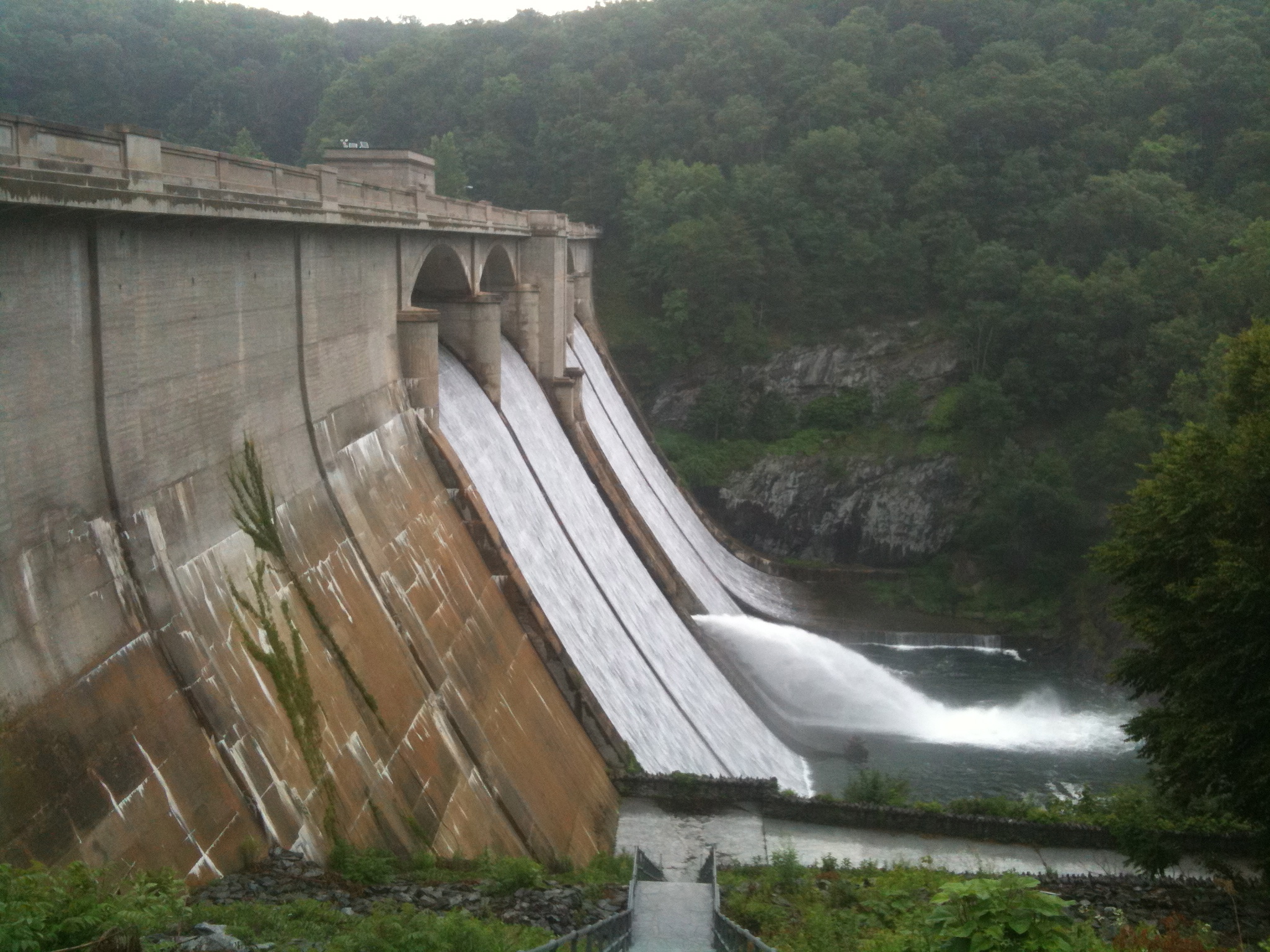
Prettyboy Dam in Warmer Times

With the first substantial snowfall of the year on the ground here in the Mid-Atlantic, thoughts drift to warmer times.  Sorting photos and happened on this great shot of Prettyboy Dam taken on a hot summer day…

Prettyboy Dam

Posted in Stormwater Management | Leave a comment

Where We’ll Be February 9, 2012

Ted Scott has been invited to speak at the Purdue University Indiana Local Technical Assistance Program’s Stormwater and Drainage Conference on February 9, 2012.  He will be leading two sessions:

  • Stormwater Inspection and Maintenance Programs and Techniques
  • Design Impacts on Stormwater Maintenance

It should be interesting to share our perspective in the Mid-West.  Check it out here.

Posted in Stormwater Management | Leave a comment

You Never Know Who You’ll See in a Storm Drain

This little fella was a bit confused…

Posted in Stormwater Management | Leave a comment

Break out your suit and get ready to swim the Baltimore Harbor!

It is game-on for the Baltimore Harbor: check it out here and here.

Posted in Stormwater Management | 1 Comment

Newsflash: Scott Invited to Testify at U.S. Senate Subcommittee Hearing

Hunt Valley, MD – December 12, 2011 – Theodore E. Scott, PE, CPESC, LEED AP, Executive Vice President and Founder of Stormwater Maintenance, LLC, was invited by the Senate Committee on Environment and Public Works Subcommittee on Water and Wildlife, spearheaded by Chairman, Senator Benjamin L. Cardin, to testify at a hearing entitled “Our Nation’s Water Infrastructure: Challenges and Opportunities” on December 13, 2011.

The purpose of this hearing is to examine the challenges associated with the nation’s aging water and wastewater infrastructure; to discuss the importance of water and wastewater infrastructure to our nation’s waters and safe drinking water; to explore potential approaches to water and wastewater infrastructure improvements, including effective best management and financing strategies; to understand the potential value of water and wastewater infrastructure investment to economic growth and job creation.

“This is a tremendous venue to educate government officials about the challenges facing our nations’ water infrastructure and the resultant business opportunities that lie ahead”, stated Scott.

Mr. Scott applies his more than 20 years of expertise to addressing the issues with existing stormwater infrastructure.  This is his third invitation to speak in Washington.  Stormwater Maintenance LLC is an industry leader providing turn-key engineering, maintenance and full construction capabilities for organizations that own or manage stormwater  infrastructure throughout the Mid-Atlantic.   To obtain additional information, including an overview of Stormwater Maintenance’s capabilities and completed projects, visit www.swmaintenance.com.

Posted in Stormwater Management | Leave a comment

Where we’ll be: December 1, 2011 – EPA HQ

As a follow-up to Ted Scott’s recent Capital Hill Congressional Briefing, he has been invited to present directly to interested staff at the US Environmental Protection Agency in Washington DC.  His presentation will expand on the Capital Hill talk, including discussion on some of the challenges associated with designing Green Infrastructure.

Posted in Stormwater Management | Leave a comment

Pacific Garbage Patch Set to Get a Bonus Donation from Japan’s Tsunami

From YouTube Science Astronomy Physics Spaceflight Cosmology Channel via Sailing Anarchy:

Accompanying text:

Where Will the Debris from Japans Tsunami Drift in the Ocean?

The powerful tsunami triggered by the 9.0 Tohoku Earthquake destroyed coastal towns near Sendai in Japan, washing such things as houses and cars into the ocean. Projections of where this debris might head have been made by Nikolai Maximenko and Jan Hafner at the International Pacific Research Center, University of Hawaii at Manoa. Maximenko has developed a model based on the behavior of drifting buoys deployed over years in the ocean for scientific purposes. What this model predicts about the tsunami debris can be seen in this simulation.

The debris first spreads out eastward from the Japan Coast in the North Pacific Subtropical Gyre. In a year, the Northwestern Hawaiian Islands Marine National Monument will see pieces washing up on its shores; in two years, the remaining Hawaiian islands will see some effects; in three years, the plume will reach the US West Coast, dumping debris on Californian beaches and the beaches of British Columbia, Alaska, and Baja California. The debris will then drift into the famous North Pacific Garbage Patch, where it will wander around and break into smaller and smaller pieces.

In five years, Hawaii shores can expect to see another barrage of debris that is stronger and longerlasting than the first one. Much of the debris leaving the North Pacific Garbage Patch ends up on Hawaii’s reefs and beaches. These model projections will help to guide clean-up and tracking operations. Tracking will be important in determining what happens to different materials in the tsunami debris, for example, how the composition of the debris plume changes with time, and how the winds and currents separate objects drifting at different speeds.

Even before the tsunami, the World Ocean was a dump for rubbish flowing in from rivers, washed off beaches, and jettisoned from oil and gas platforms and from fishing, tourist, and merchant vessels. Marine debris has become a serious problem for marine ecosystems, fisheries, and shipping. The presentations given at the recent week-long 5th International Marine Debris Conference in Hawaii, at which Maximenko had organized a day-long workshop, are a testimony to the magnitude of the ocean debris problem. The massive, concentrated debris launched by the devastating tsunami is now magnifying the hazards.

Maximenko’s long-standing work on ocean currents and transports predicted that there are five major regions in the World Ocean where debris collects if it is not washed up on shores or sinks to the ocean bottom, deteriorates, or is ingested by marine organisms. These regions turn out to be “garbage patches.” The North Pacific Garbage Patch has become famous, the North Atlantic Patch was fixed some years ago, and the South Atlantic, South Indian Ocean, and South Pacific patches have just been found, guided by the map of his model that shows where floating marine debris should collect.

This research was supported by grants from the Japan Agency for Marine-Science and Technology (JAMSTEC), NASA, and NOAA.
http://files.khnl.com/news/a_maximenko_tsunami_debris.pdf

Animated Simulation:
http://iprc.soest.hawaii.edu/users/nikolai/2011/Pacific_Islands/Simulation_of.

Posted in Stormwater Management | Leave a comment